
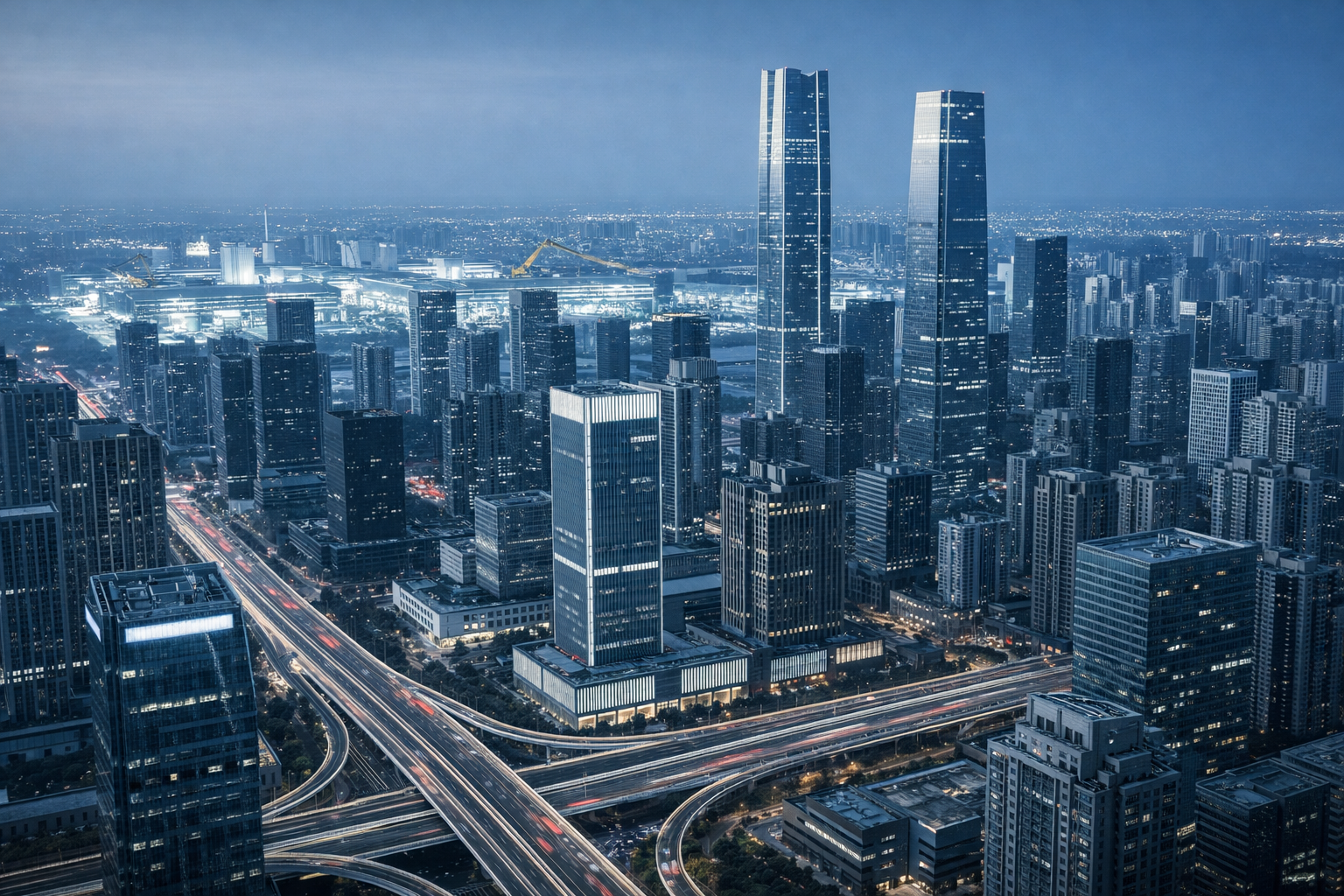

By the numbers, China’s economy appears to be performing a masterful balancing act. Under the hood, however, the engine of its historic rise, real estate is being dismantled.
On the surface, Beijing has delivered exactly what it promised. The world’s second-largest economy hit its official growth target of 5% for 2025, a figure that projects stability to global markets. Yet, this headline statistic belies a far more fracture-prone reality. The fourth quarter of 2025 saw growth decelerate to 4.5%, the weakest reading since the first quarter of 2023 and the drivers of this economic activity have fundamentally shifted. We are witnessing the end of the construction super-cycle and the beginning of a painful, multi-year period of inventory digestion that will define China’s economic trajectory through 2026 and 2027.
The data released this week paints a picture of an economy running on a single engine, exports, while its domestic cylinders, specifically property and consumption, sputter. The 2026 mandate from Beijing is no longer about "optimizing" the property sector; the language has hardened to "inventory reduction." This semantic shift signals a recognition that the supply-demand imbalance has calcified into a structural crisis that monetary easing alone cannot dissolve.
To understand the severity of the challenge facing policymakers in 2026, one must look past the GDP figures and into the granular data of the housing stock. The defining metric of the current downturn is the "destocking cycle." By November 2025, the time required to clear housing inventory across 100 Chinese cities hit a record high of 27.4 months.
This is not merely a cyclical dip; it is a liquidity freeze. Homes listed for sale are now languishing on the market for an average of 22.2 months before closing. This paralysis is driven by a profound mismatch between seller expectations and buyer reality. While official data indicates that home prices have fallen approximately 20% since the 2021 peak, market clearing prices are significantly lower. In many cities, transaction volume has stalled because buyers are demanding discounts of up to 80% from peak valuations, a capitulation that sellers, and by extension, the local governments relying on land values are unwilling to accept.
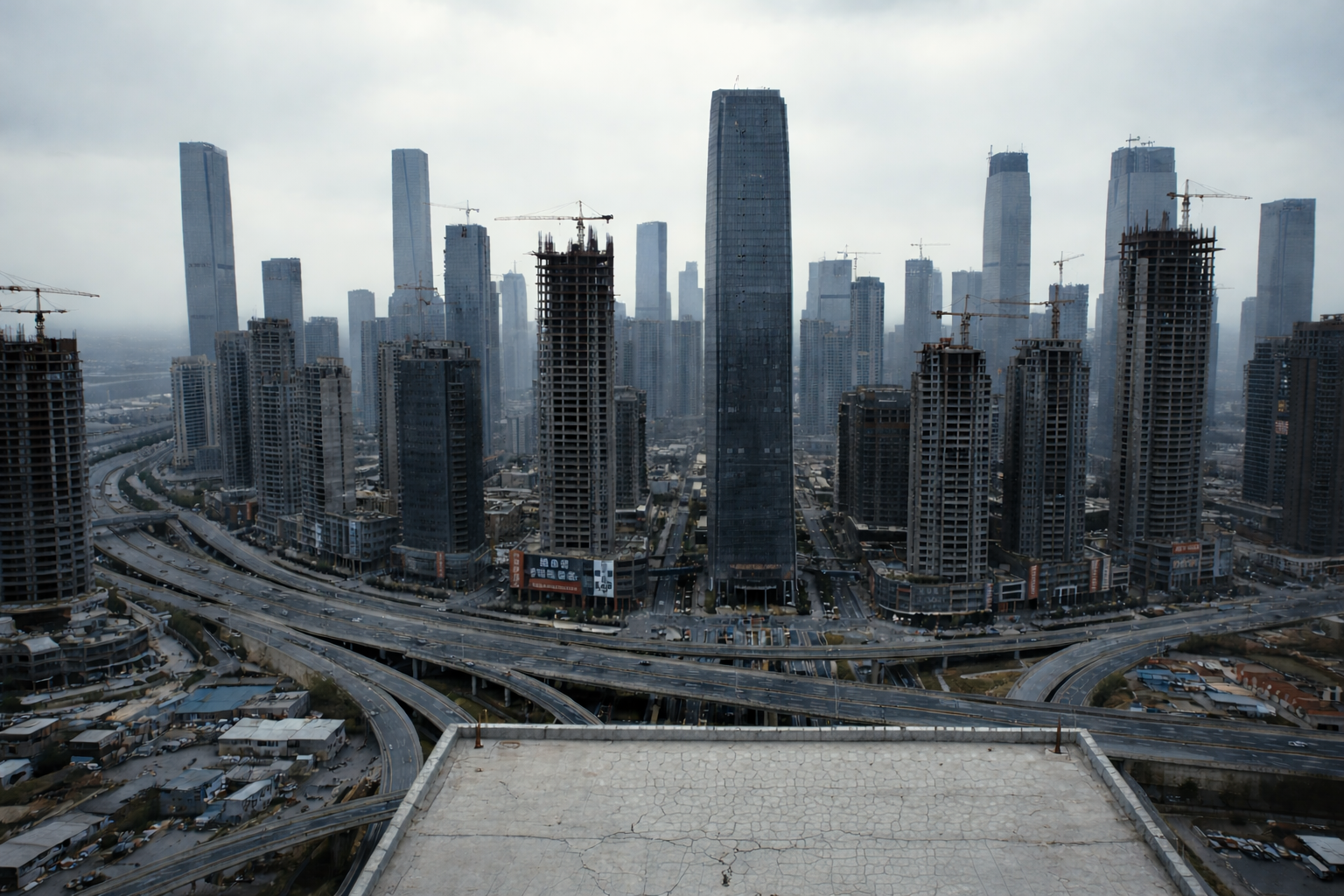
The fallout is evident in the collapse of investment capital entering the sector. Investment in property development plummeted 17.2% in 2025, deepening significantly from a 10.6% drop in 2024. This contraction was severe enough to drag overall fixed-asset investment down by 3.8% for the year, the first such decline China has recorded since 1989.
The 2026 strategy outlined at the Central Economic Work Conference explicitly pivots away from the traditional model of new home sales. The directive is to strictly control new supply while aggressively reducing existing stock. The logic is brutal but necessary: with 440 square feet of housing per person in 2024, up from less than 100 square feet in 1976, the era of shortage is over. The market is now grappling with the consequences of decades of overbuilding.
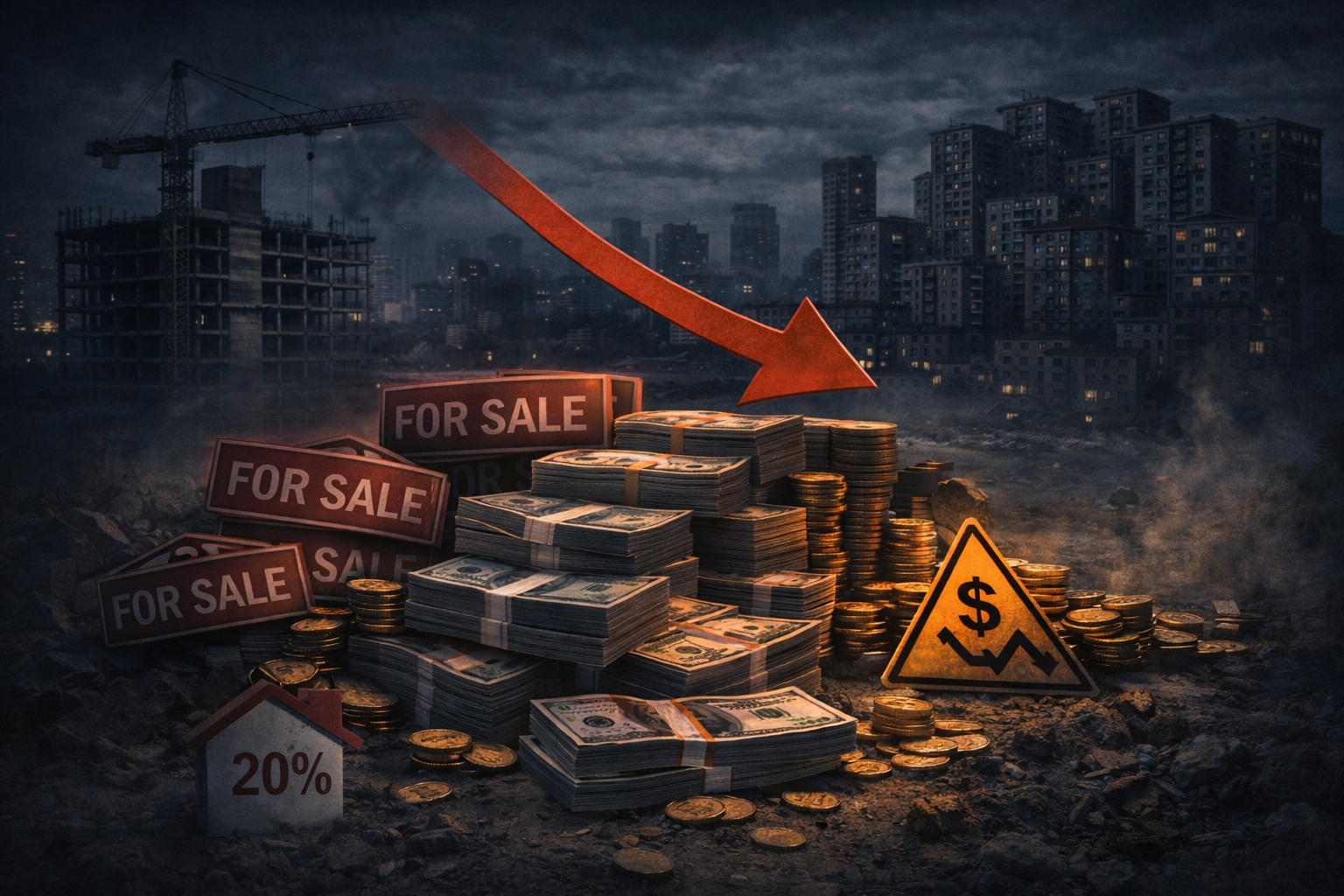
The transmission mechanism from the property crash to the broader economy is the "wealth effect," or in this case, the lack thereof. For decades, Chinese households parked the vast majority of their savings in real estate, operating under the assumption that prices would only appreciate. The erasure of this perceived wealth has triggered a defensive crouch in consumer behavior.
Retail sales data from December 2025 confirms this retrenchment. Sales grew by a meager 0.9%, the slowest pace since late 2022. Even more telling is the collapse in credit demand. New bank loans shrank to a seven-year low of 16.27 trillion yuan ($2.33 trillion) in 2025. This figure underscores a critical psychological shift: households and businesses are deleveraging, refusing to borrow even as the People’s Bank of China cuts rates and lowers reserve requirements.
Deflationary pressure is becoming entrenched. The GDP deflator, the broadest measure of prices across the economy, has remained negative since 2023 and is projected to fall by another 0.5% in 2026. This would mark the longest streak of deflation on record. While consumer inflation (CPI) ticked up slightly to 0.8% in December, producer prices (PPI) fell 1.9%, signaling that industrial pricing power remains weak.
The correlation is stark: as property values erode, confidence evaporates. The "anti-involution" campaigns and efforts to build a "unified national market" mentioned in policy outlines are attempts to spur internal demand, but the drag from the property sector is overwhelming these green shoots. The 15th Five-Year Plan aims to prioritize consumption, but with the property downturn expected to shave 0.5 to 1 percentage point off GDP growth in 2026, the headwinds are fierce.
If the property market is the anchor dragging the economy down, external trade is the balloon keeping it afloat. China reported a record trade surplus of nearly $1.2 trillion in 2025. Net exports accounted for nearly one-third of the country's total GDP growth. This reliance on foreign demand has allowed Beijing to delay large-scale stimulus, effectively using the global consumer to offset the domestic property recession.
However, this growth model is becoming increasingly precarious. The "new economy"—innovation-driven sectors which accounted for 15-20% of GDP in 2024 is expanding, but it cannot immediately absorb the labor and capital displaced by the construction collapse. While policymakers aim to raise R&D spending to over 3.2% of GDP by 2030, the transition is creating a two-speed economy: a high-tech manufacturing sector that is world-class and export-oriented, sitting alongside a traditional domestic economy plagued by insolvency.
This imbalance has drawn sharp criticism from trading partners and fueled rising trade frictions, particularly with the United States. With tariffs looming and global trade truces set to expire, the ability of exports to continue masking domestic weakness is diminishing. As Eswar Prasad of Cornell University noted, a situation where a major economy relies so heavily on exports because of plunging investment and weak consumption is "untenable."
Policy Outlook 2026: Triage and Transition
Looking ahead to 2026 and 2027, the forecast is one of "resilience and rebalancing," a polite euphemism for a managed decline in growth rates. The baseline forecast expects GDP growth to slow modestly to 4.5% in 2026.
The government’s response will likely be incremental rather than a "bazooka" style stimulus. The policy toolkit for 2026 focuses on:
- Inventory Conversion: A push to acquire existing unsold commercial real estate for use as affordable housing. This kills two birds with one stone: reducing the inventory overhang and fulfilling social housing mandates. However, local governments, starved of land sale revenue, lack the funds to subsidize these transactions without significant markdowns that developers are resisting.
- White List Expansion: Further utilizing the "white list" mechanism to ensure financing flows to specific, viable projects rather than blanket bailouts for distressed developers.
- Tiered Stabilization: A recognition of divergence. Prices in Tier-1 cities are expected to stabilize, while smaller cities with population outflows face a prolonged, painful correction.
The drag from the property sector is forecast to narrow, but it will not disappear. Property sales and new starts are projected to decline by another 5-10% in 2026. While this is an improvement over the double-digit crashes of 2025, it confirms that the bottom has not yet been reached.
Conclusion: The Long Shadow of Leverage
The narrative for China in 2026 is not about a rebound; it is about containment. The objective is to manage the deflation of the largest asset bubble in history without triggering a systemic financial crisis. The 5% growth of 2025 was achieved through a surge in manufacturing and exports that offset a 17.2% collapse in property investment. That trade-off is yielding diminishing returns.
Investors must recognize that the "Old China" thesis built on urbanization, steel, and concrete is definitively over. The "New China" thesis built on high-tech manufacturing and domestic consumption is struggling to gain traction against the headwinds of wealth destruction. With independent estimates from groups like Rhodium suggesting actual growth may be closer to 2.5% or 3%, the margin for policy error is vanishingly thin. The 2026 agenda is clear: stabilize the rot in real estate, or risk the entire economic structure.
References
https://www.nytimes.com/2026/01/18/business/china-gdp-economy.html
https://www.reuters.com/world/asia-pacific/chinas-home-prices-extend-decline-december-2026-01-19/
https://gmk.center/en/news/china-outlines-plan-to-stabilize-real-estate-sector-in-2026/
https://www.cnbc.com/2026/01/19/china-q4-gdp-growth-2025-target-retail-sales-industrial-output-investment-income-employment.html
https://www.yicaiglobal.com/news/china-to-focus-on-stabilizing-real-estate-market-by-reducing-housing-inventory-next-year
https://www.ubs.com/global/en/investment-bank/insights-and-data/articles/china-outlook.html
.svg)